




After every attack by Ukrainian long-range drones, cruise or ballistic missiles on Russian oil terminals, oil refineries and military facilities, whining intensifies on social networks across the aggressor country. With comments like, "Why us?", "We just wanted to live peacefully, but now we have to dodge drones and raining oil."
The Kremlin directs practically 40 kopecks of every tax ruble toward manufacturing tanks, guns, UAVs and missiles. Workers at thousands of private companies that supply bearings, cables, rivets, and other materials for the Ministry of Defense are direct participants in the war. The same applies to steelworkers whose products are used to manufacture tanks and shells, and chemical workers involved in making explosives. This also includes private contractors who deliver materials to warehouses for servicing strategic bombers.
All these Russians are in one way or another involved in the killing of Ukrainians, since their participation in the war is no different from, say, desk-bound servicemen at headquarters. Both may never hold a weapon, but they are part of a large war machine responsible for tens of thousands of civilian deaths. The situation is similar with defense industry workers. Although it is extremely difficult to prove a specific person’s involvement in the production of a cartridge, shell or bomb that later caused the death of Ukrainians, workers at these Russian plants knowingly produce weapons not for defense, but for killing.
Moreover, in some cases they may be directly subordinated to the military, illegally crossing Ukraine’s border to carry out combat assignments practically on the line of contact. But if they are hit, Russia will scream from the rooftops about the "cynical killing of non-combatants."
In this investigation, we will examine how Russian arms makers travel to the "special military operation" zone, why all state defense order workers should be legally recognized as combatants, and how Russians are scaling up the production of howitzers and MLRS, using the example of one of the largest machine-building companies, JSC Motovilikha Plants. 24 Channel obtained the analytical materials, exclusive workshop photographs, and employees' personal data from sources in the Argus analytical group.
An Industrial Giant on Life Support
Joint Stock Company Motovilikha Plants (OGRN 1025901364026, TIN 5906034720), located in Perm, is Russia’s largest manufacturer of multiple-launch rocket systems, self-propelled artillery systems, and howitzers. The company is owned by JSC Technodinamika, which is wholly owned by the state corporation Rostec, led by Putin’s close associate Sergey Chemezov.
The enterprise was founded back in 1736 and occupies 17,000 hectares. At its peak, the plant was an industrial powerhouse: during World War II alone, a quarter of all Soviet artillery systems rolled off the Motovilikha production lines.
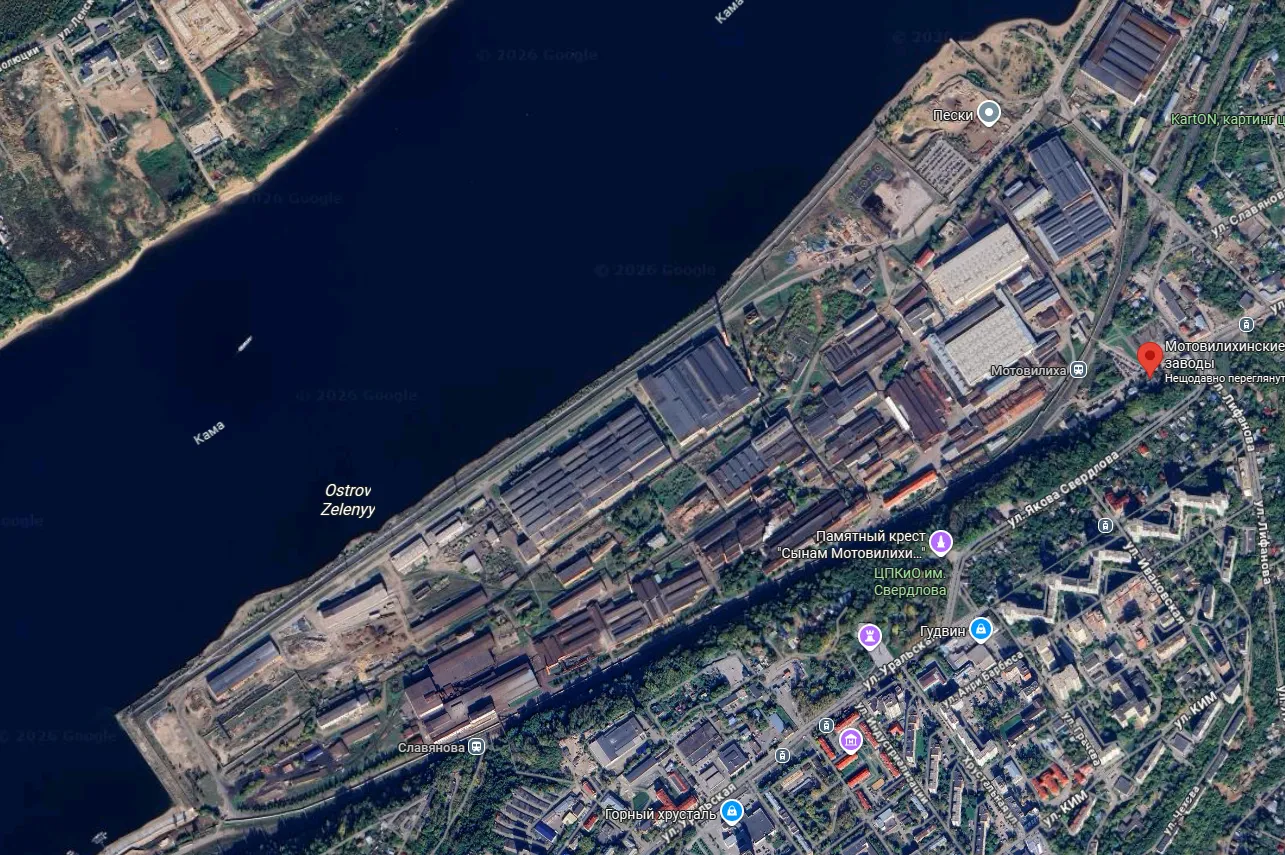
The territory of Motovilikha Plants / Screenshot from Google Maps
In Soviet times and after the collapse of the "prison of nations," Moscow pumped enormous funds into the plant just to keep churning out artillery at maximum capacity. Outdated equipment, expensive production, corruption, and the plant's lack of economic viability at the scale determined by the Kremlin led to the joint-stock company repeatedly finding itself insolvent. In 2017, bankruptcy proceedings were initiated against the company, but given the aggressive plans of the Russian leadership, the loss-making enterprise was not closed. Following the start of the full-scale invasion, the plant’s management was ordered to ramp up the refurbishment and production of equipment. However, due to sanctions, the weakening ruble, unfavorable economic conditions, and bureaucratic inertia, attempts to revive Motovilikha once again failed.
A temporary improvement and a relative thaw set in in February 2025, when the plant was taken over by a local deputy from Naberezhnye Chelny, Yevgeny Arkhipov (according to Manticore, passport number 9223-394758, issued on Sept 23, 2023 by the Ministry of Internal Affairs for the Republic of Tatarstan, TIN 165003181348), who dismissed almost the entire previous management team. However, this does not mean that a strong executive took the reins. The state simply injected more than 30 billion rubles into Motovilikha, since it planned to almost double the production of artillery equipment. If one also takes into account contracts worth hundreds of billions for 2022–2026, it becomes clear that the leadership reshuffle is likely just a clan struggle for control over these massive funds.
With almost 90% of JSC Motovilikha Plants’ products being military goods, it can easily be said that the company is a hopelessly ill patient connected to a ventilator. Practically everything made in Motovilikha’s workshops will be burned in the combat zone in Ukraine and will not bring the Russian economy a single kopeck. And after active hostilities end, the enterprise will most likely close, since the state will hardly be able to invest billions in goods that have no added value. At least, it is absolutely impossible to predict that in a nominally peaceful period Moscow will be able to allocate such large sums to maintain workers who bring no profit to the economy. Especially since even now Motovilikha Plants cannot settle accounts with contractors and frequently misses deadlines for fulfilling defense orders, which is why both the state and private companies are suing it. In peacetime, this enterprise will quickly go bankrupt.
Motovilikha Is Being Developed at a Frantic Pace
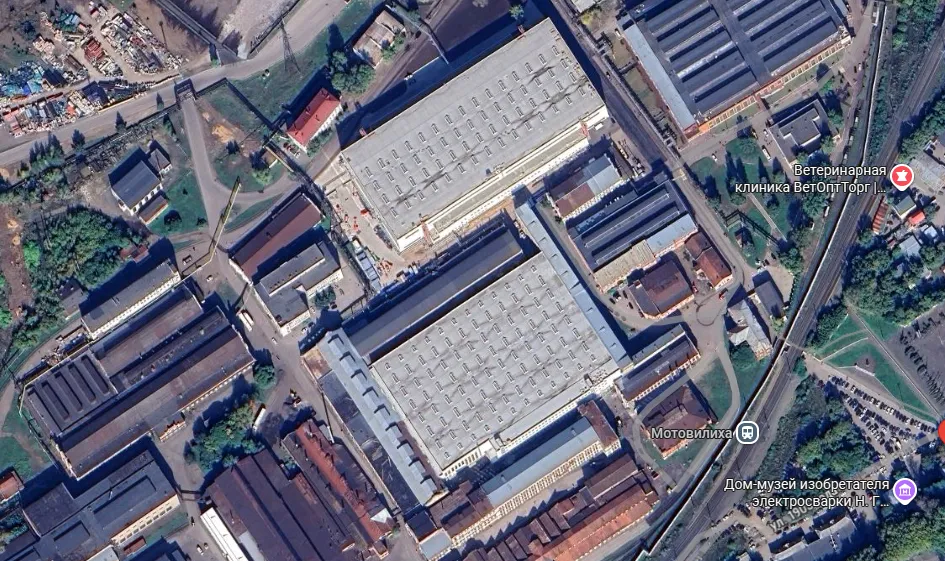
Despite all the economic problems, the state continues to literally flood Motovilikha Plants with money. Since 2022, and after the change of leadership in 2025, considerable construction began (and continued) at the enterprise. Old workshop No. 45 was almost completely demolished, and a new building was erected in its place. Workshop No. 80 was reconstructed almost beyond recognition.
Two essentially new buildings on the plant’s territory / Screenshot from Google Maps
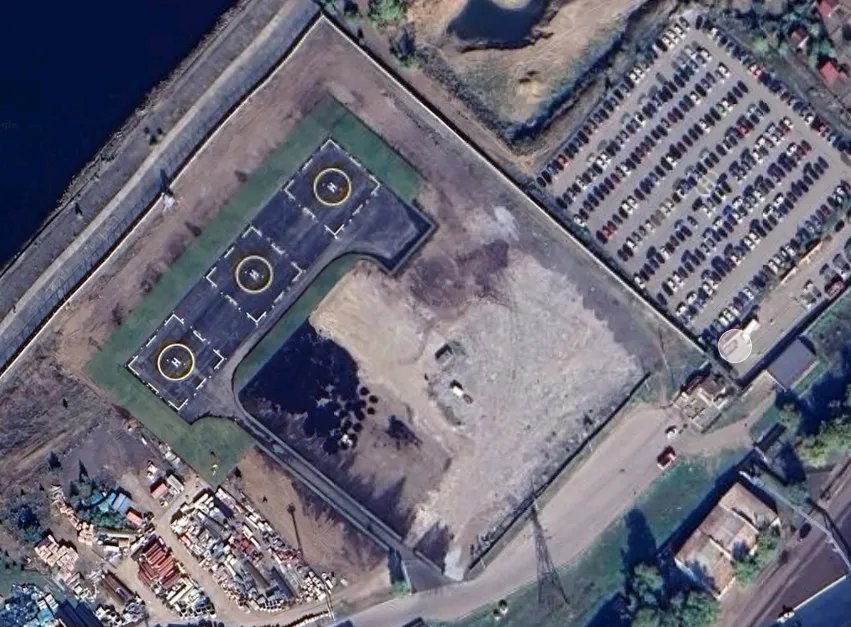
A new helipad even appeared on the territory, which is now fully operational.
Only for VIP clients / Screenshot from Google Maps
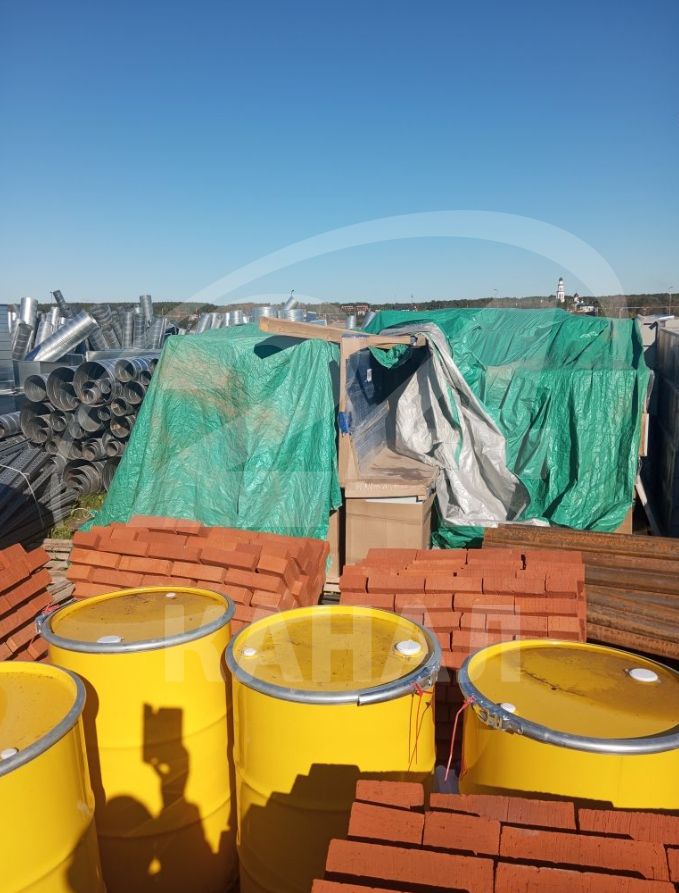
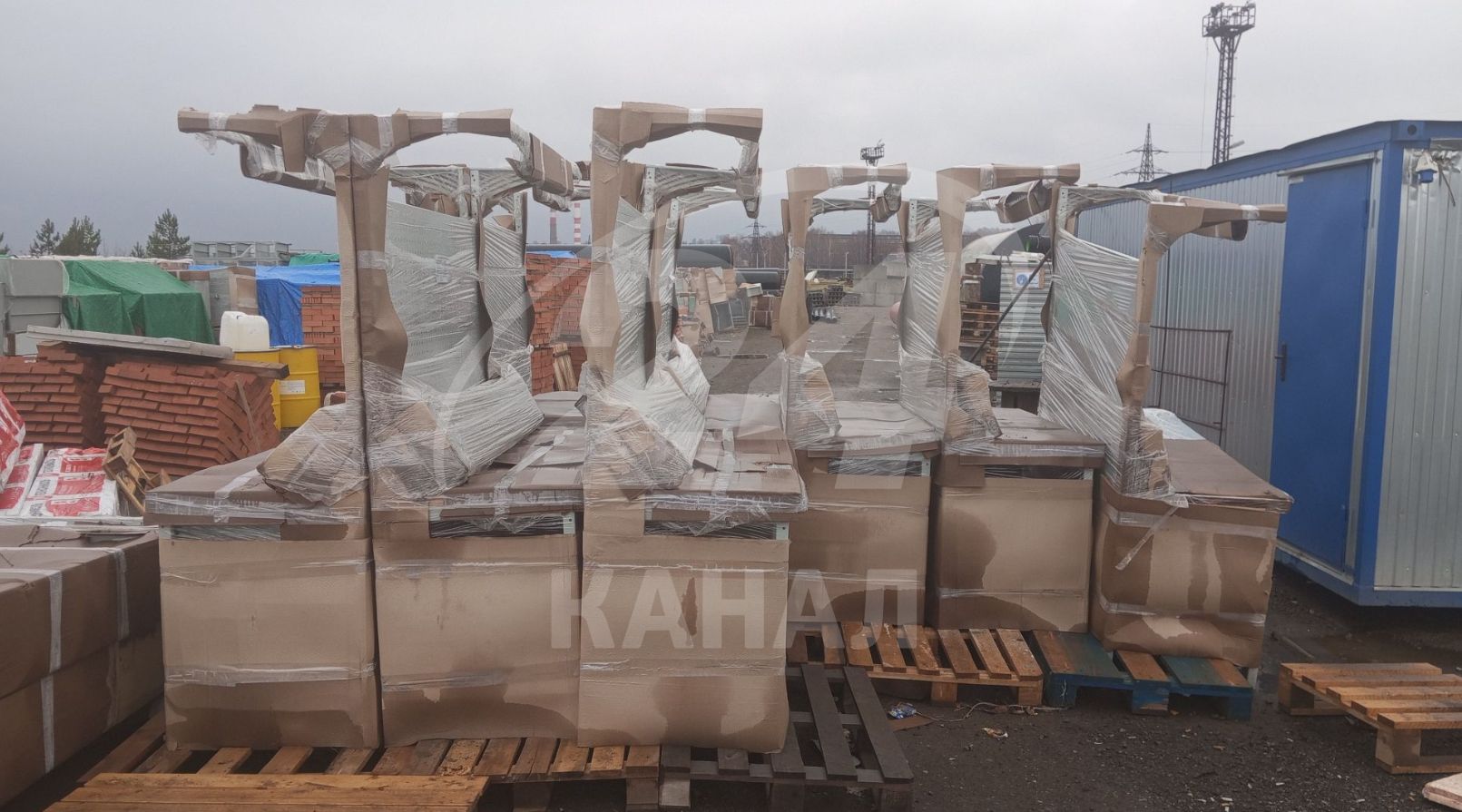
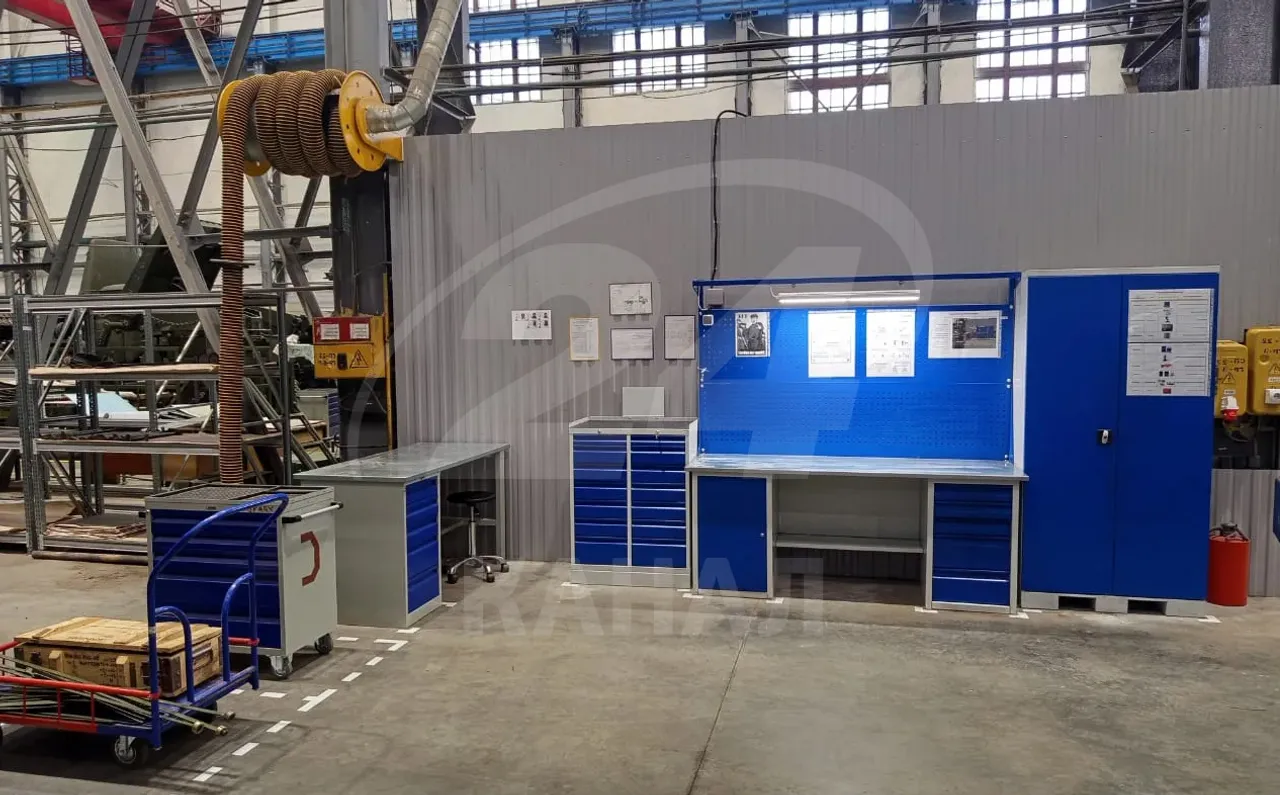
The management tried to change approaches to production processes: new workbenches were brought in and tools were purchased for some workshops.
See photos of new workbenches, bricks and various materials for construction and repairs on the territory of JSC Motovilikha Plants / Photos by 24 Channel from sources in the Argus analytical group:
According to management’s plans, the reorganization was supposed to ensure greater efficiency among employees and lead to faster fulfillment of defense orders.
Visualization of a mechanic’s workplace in one of the workshops / Photo by 24 Channel from sources in the Argus analytical group
However, these changes did not affect the overall situation at the plant in any way. Most workplaces remained just as dirty and neglected as they had been.
The narrow passages in large shops, cluttered with parts and debris, did not disappear either.
Old tiles, spare parts along the walls, debris underfoot – the norm for JSC Motovilikha Plants / Photo from sources in the Argus analytical group
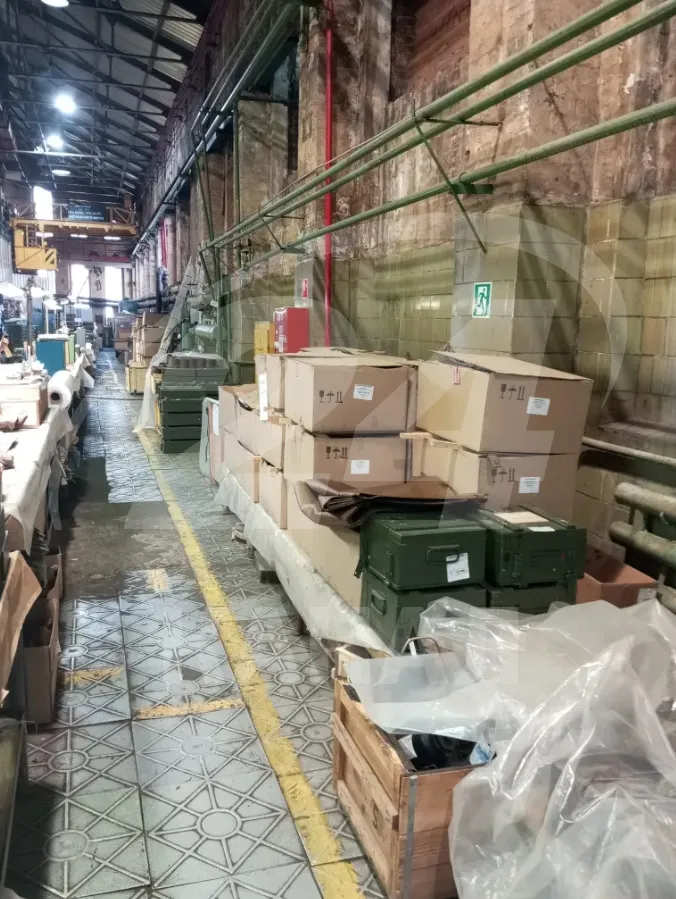
Cracks in the floor and in the foundations for machine tools, which must remain perfectly stable and perform high-precision machining under conditions of vibration and load, did not disappear either.
See photos from the workshops of JSC Motovilikha Plants / Photos by 24 Channel from sources in the Argus analytical group:
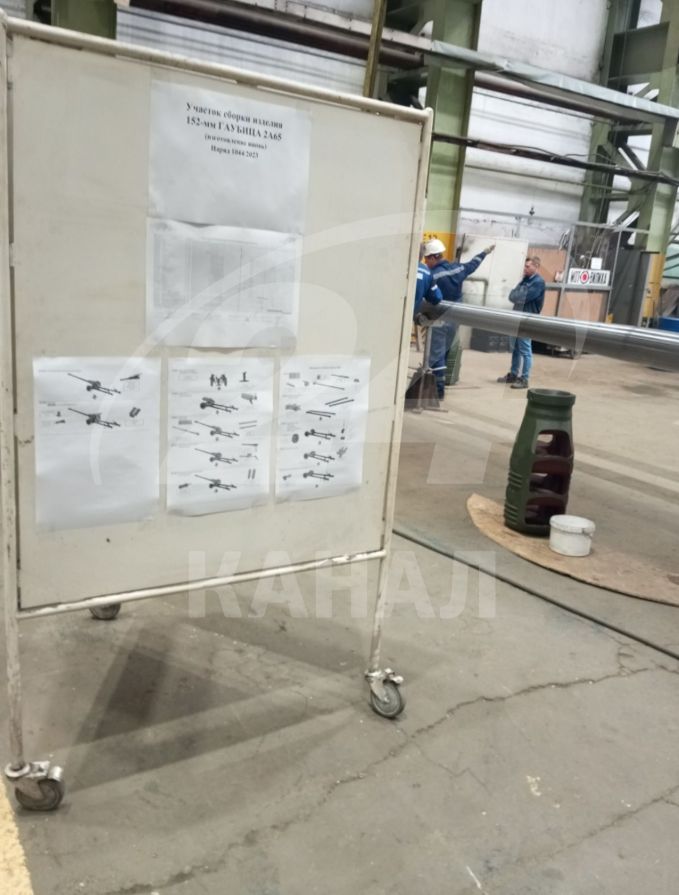
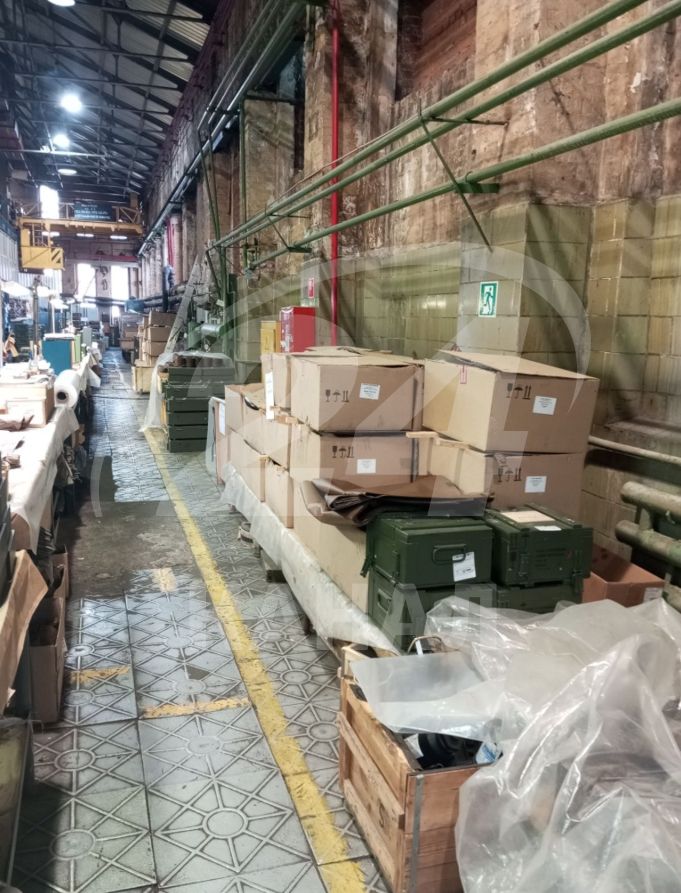
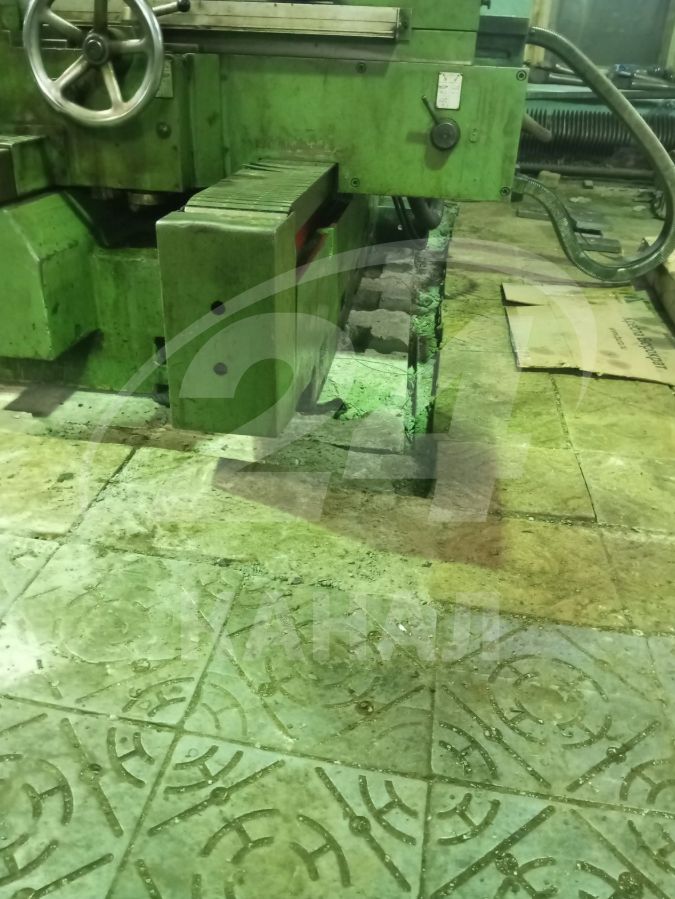
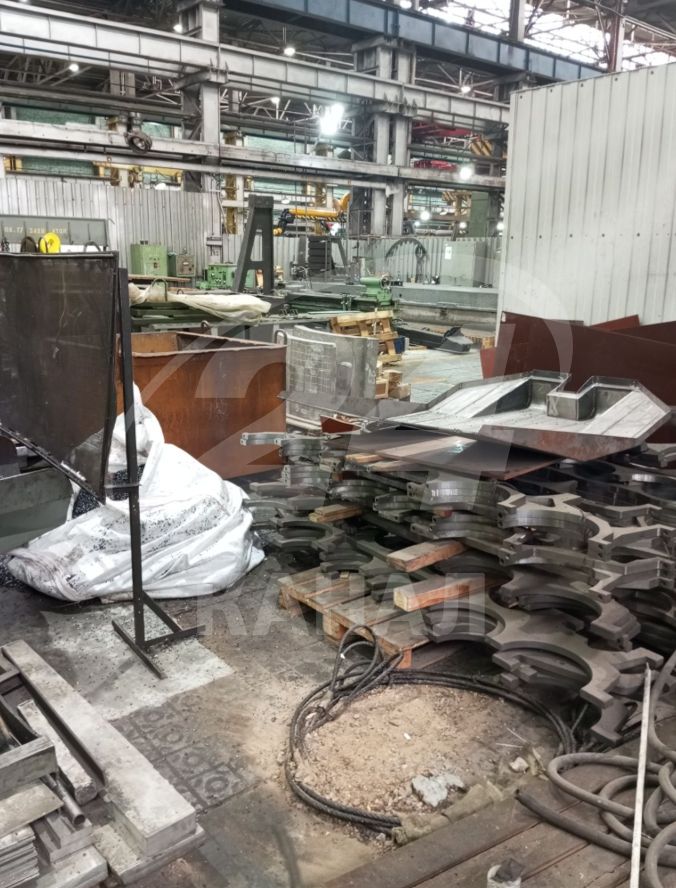
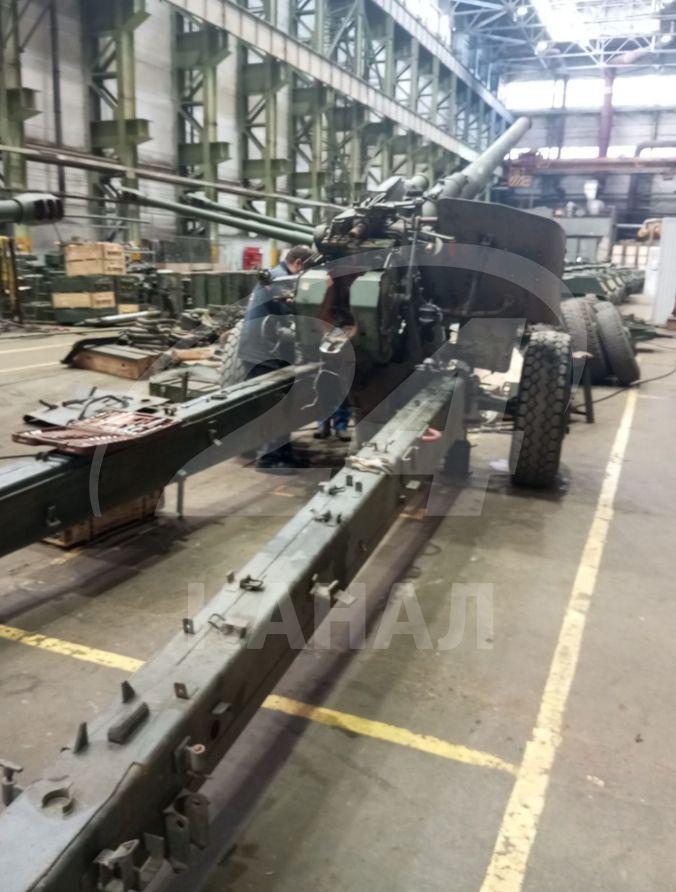
The situation with machine tools has not improved either. New Chinese and Russian counterparts often break down or simply are not as precise as needed. Soviet ones require constant repairs and are not noted for accuracy.
A Soviet machine tool produced in the 1980s after a major overhaul in 2024 / Photo by 24 Channel from sources in the Argus analytical group
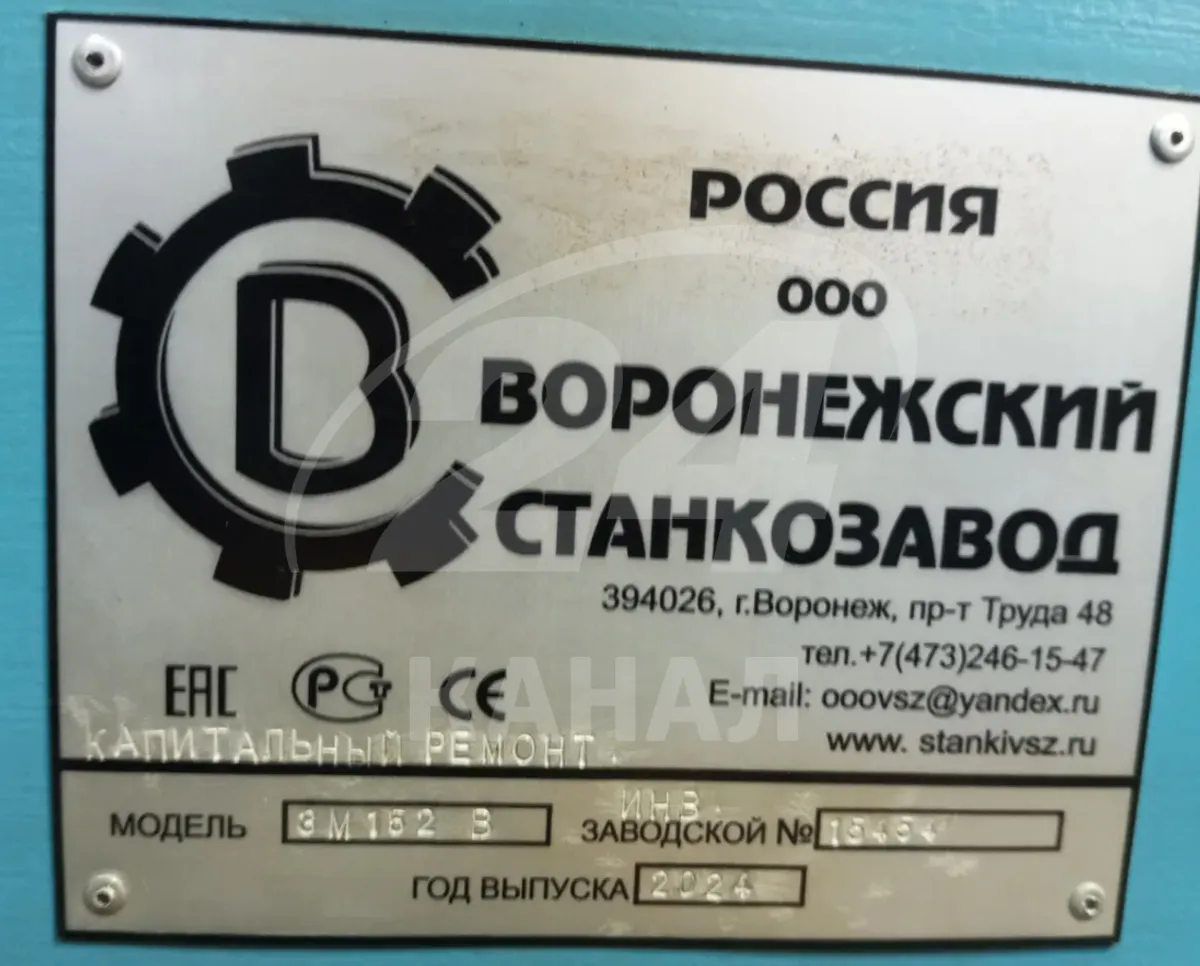
Still, one should not think that a plant critical for the Russian army has no high-precision and modern machine tools. According to an investigation by The Insider, Motovilikha Plants has access to repair, modernization and even the import of products from Western industrial giants.
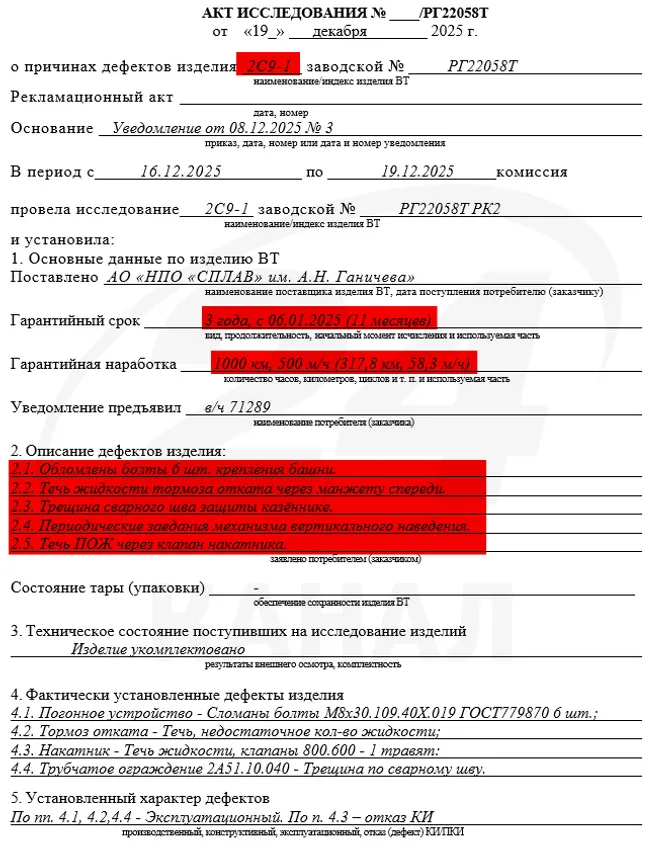
However, the quality of Motovilikha’s products still remains questionable. This is evidenced by one of the defect reports for the 2S9-1 Sviristelka. The self-propelled artillery system, which entered service on January 6, 2025, failed to even last through its 3-year warranty period. Motovilikha specialists stated that in 11 months of operation, with a mileage of 318 km out of the declared 1,000 (58 engine hours out of 500), six turret-mounting bolts on the SPG broke, the recoil and recoil-brake fluids leaked, the breech welds cracked, and the vertical guidance mechanism jammed. Simply put, the brand-new artillery system can fire, but it can only be aimed horizontally, while the energy from the shot can both kill the crew and destroy the vehicle itself.
And this SPG has not even been to the "SMO" yet / Photo by 24 Channel from sources in the Argus analytical group
Trips to War and the Killing of Ukrainians: Why Russian Factory Workers Are Participants in the War
Motovilikha factory workers perform their "duties to the state" not only directly at the plant. Like representatives of many other enterprises of the Russian military-industrial complex, they are often sent on business trips, including to the combat zone. Numerous engineers from Alabuga regularly appear in the occupied territories and in border areas equipped for launching "Shaheds" and "Gerans." Factory workers from Uralvagonzavod, Almaz-Antey, the State Unitary Enterprise Instrument Design Bureau, the Gradient Research Institute and many other companies regularly arrive at the deployment sites of the occupation forces to repair and service equipment, train servicemen and provide them with practical advice on the tactics of using weapons. In the case of Alabuga, "civilian and innocent engineers" often personally take part in drone launches.
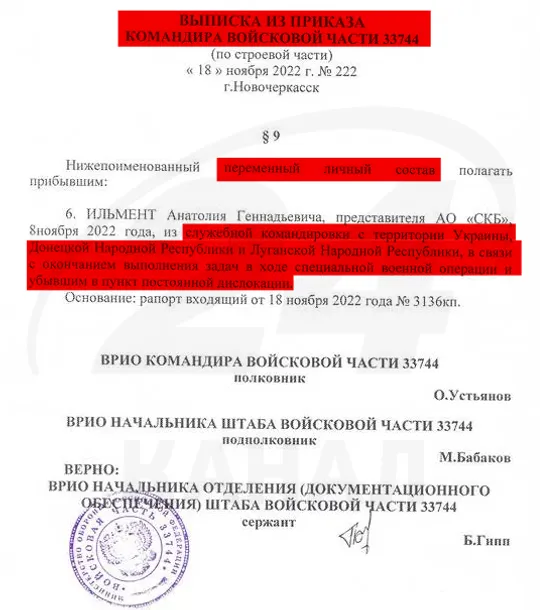
At Motovilikha Plants, the employees who most often go on work trips for defect detection, servicing and repair are from the department for servicing weapons and military equipment. For example, chief specialist Anatoly Gennadiyevich Ilment (passport series 5722 number 325451, issued on 26.12.2022 by the migration department of Police Department No. 7 (Sverdlovsky District deployment) of the Ministry of Internal Affairs of Russia for Perm) and his team illegally crossed the Ukrainian border as replacement personnel of a military unit to "perform tasks during the special military operation" in November 2022.
The very wording of the reason for the business trip, as well as the presence of orders for arrival and departure from the military unit commander, indicate that it is inaccurate to view Ilment and his colleagues ordinary civilians.
A "peaceful engineer’s" business trip to perform military tasks during the "SMO" / Photo by 24 Channel from sources in the Argus analytical group
Later extracts from orders no longer contained such wording. They stated that teams of factory workers from Motovilikha merely "provided qualified assistance" to the occupation forces.
See photos of orders from military unit commanders regarding business trips of JSC Motovilikha Plants employees to the occupied territories / Photos by 24 Channel from the Argus analytical group:
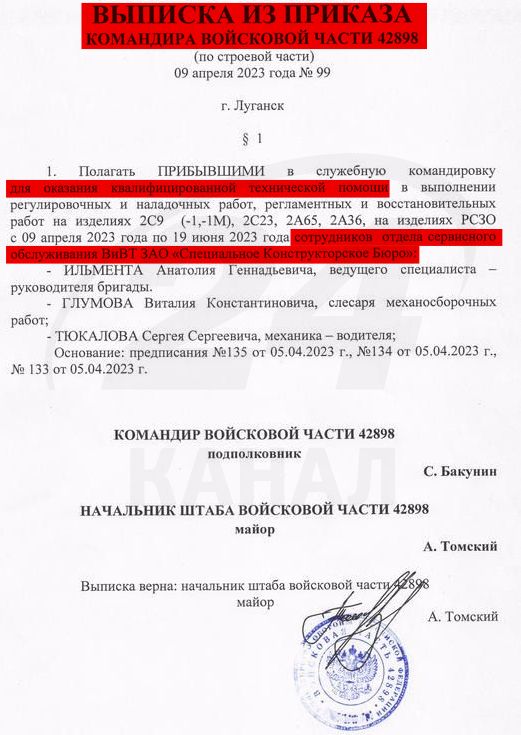
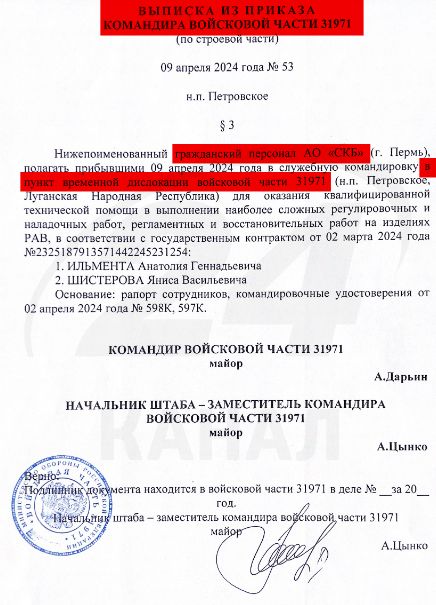
That is, when servicemen of some repair battalion or technical service of a unit fix equipment, they are combatants, but when factory employees do the same right next to the line of contact, they remain ordinary civilians? Especially given that Ilment and his accomplices were not restoring some armored vehicles in peacetime somewhere at storage depots. They clearly understood that their work repairing MLRS and other artillery systems would support the Russian military’s ability to kill Ukrainians, destroy cities, and so on.
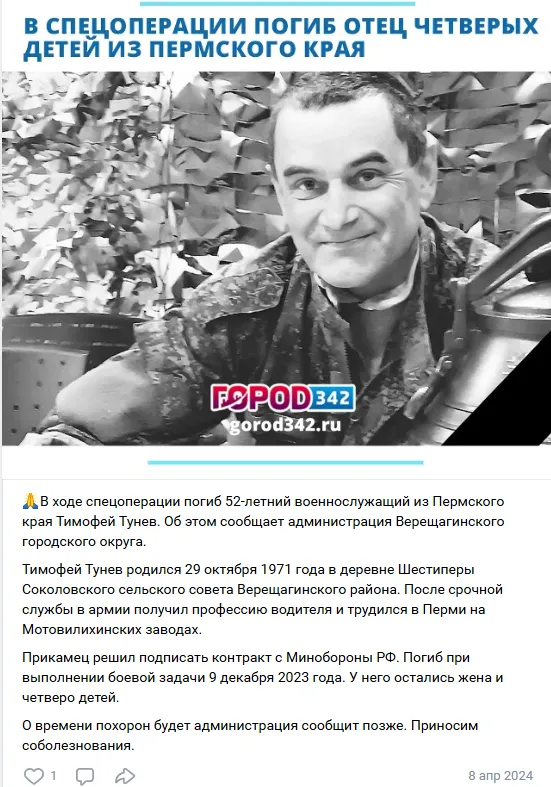
Other employees of Russian factories likewise understand that their products will be used on the battlefield. Everyone who assembles tanks, wheeled vehicles, missiles, mines and other ammunition is de facto a participant in war crimes against Ukraine. They often sign contracts and go to fight.
An obituary mentioning an employee of Motovilikha Plants / Screenshot from Russian media
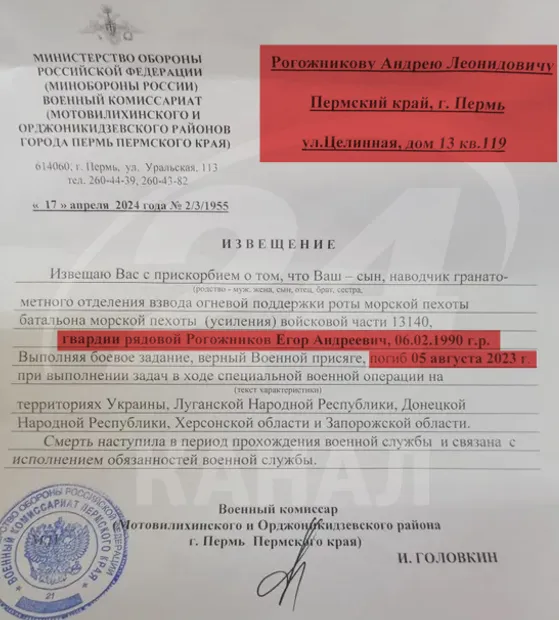
They send their own children to war, receive death notices and then, for some reason, spend the rest of their lives hating Ukrainians.
A death notice for the son of one of Motovilikha’s mechanics / Photo by 24 Channel from sources in the Argus analytical group
Or they simply remain "small cogs in the war machine," making weapons from shift to shift. Proud that they are "forging victory, as their grandfathers did in 1941–1945." And when heavy missiles strike their enterprise during working hours, they are sincerely outraged at the deaths of "peaceful specialists." Although in reality all of them are full-fledged combatants. That is why the activities of factories connected to Russia’s defense-industrial complex attract such close attention from OSINT specialists, intelligence services and other representatives of the Defense Forces. After all, sooner or later there will be accountability for crimes against the Ukrainian people.
Artem Dekhtyarenko, head of the Department for Interaction with the Media and Public Relations of the Security Service of Ukraine, noted in an exclusive comment for 24 Channel that all enterprises of the enemy’s military-industrial complex are legitimate military targets under the Geneva Convention.
The Service systematically gathers evidence concerning perpetrators who deliberately facilitated the conduct of an aggressive war, the production of means of destruction or other crimes against Ukraine. After that, such persons, including Russian citizens, are brought to justice under due process of law,
Dekhtyarenko emphasized.
President Volodymyr Zelenskyy, the head of the President’s Office and former head of Ukraine’s Defense Intelligence Kyrylo Budanov, as well as former SBU head Vasyl Maliuk, have repeatedly said that everyone involved in crimes against our state will receive just punishment. So it makes no difference where numerous soldiers and officers, welders and engineers will hide. Someone may be harshly eliminated with a hammer, as happened to a strategic aviation pilot; someone may be left a booby-trapped scooter near the entrance, or be arrested at Ukraine’s request in some place like Thailand. And everyone else will have to live in fear and wait for the inevitable.