




Submarines are an extremely important element in the geopolitical standoff between NATO and hostile states. They play a special role in nuclear deterrence; this capability enables countries to conduct reconnaissance, monitor ship movements, and carry out various acts of sabotage. Beyond these roles, Russia also directly strikes Ukrainian territory by launching non-nuclear versions of Kalibr missiles, and uses its fleet to record historical footage for Putin showing American military personnel seizing shadow fleet tankers. Although Russian submarines are somewhat technologically inferior to U.S. vessels, they represent one of the key pillars of security for Moscow.
One of the main developers of submarines and special underwater vehicles in Russia is the Malakhit Design Bureau (full name – "St. Petersburg Marine Engineering Bureau ‘Malakhit’ named after Academician N. N. Isanin"). This bureau has developed more than 100 submarine designs, and its specialists are currently working on a new fifth-generation submarine of the Husky class.
At the same time, some leading specialists at Malakhit are working on implementing a fundamentally new global strategic framework intended to ensure Russia’s dominance over other states, allow it to secure a leading position in Arctic resource extraction, and divide the world into spheres of influence between itself, the United States, and China.
The editorial team of Channel 24 obtained more than 80,000 leaked emails for analysis from the mailbox of the Deputy Chief Naval Architect for Weapons at Malakhit and member of the Scientific Council of the Russian Academy of Sciences, Andrey Kurnosov, provided by the private intelligence company Dallas.
This investigation reveals how the Kremlin was preparing to seize Europe as early as 2016 and planning large-scale sabotage, how Moscow intends to create global chaos to secure a dominant position in a new world security system, and the roles that war ideologue Yuri Kovalchuk and Rosneft play in this strategy.
Read this text in Ukrainian
"Bambi the Fawn," thousands of memes, and hours of "sentimental" messages: who is Andrey Kurnosov
To fully reveal the Kremlin’s ambitions for global dominance, it is worth diving into the world of the author of Russia’s ambitious project. The 64-year-old Andrey Alekseyevich Kurnosov (who, according to Manticore, holds passport series 4005 number 833515, issued May 25, 2006 by the police department of the Moskovsky district of St. Petersburg) works not only at the design bureau but also heads the BA1 "Ship Armament and Marine Robotics" department at the Baltic State Technical University "Voenmeh" named after Ustinov, the St. Petersburg State Marine Technical University (SPbSMTU), and the non-profit organization "Innovation Engineering Center."
Kurnosov’s former wife, Elena Romanova, now bears the surname Anisimova and works at the St. Petersburg branch of JSC Rosenergobank. The couple divorced in 2013 and have a daughter, Natalia. They barely communicate now. What caused their separation is unclear. It is likely that Romanova could not tolerate Kurnosov’s infidelity, as he began a passionate affair with Natalia Zornina, who at that time was a lecturer at the SPbSMTU department.
Despite a 22-year age difference, Kurnosov and Zornina dated at least from 2011 to 2016, and their relationship was something of an emotional rollercoaster for both of them. They called themselves OB and TM – abbreviations for "Bambi the Fawn" and "Mysterious Macavity" (the spy cat from "Old Possum’s Book of Practical Cats" by English poet T.S. Eliot – Channel 24).
"Cave painting" by a Candidate of Engineering Sciences / Photo from Kurnosov’s correspondence

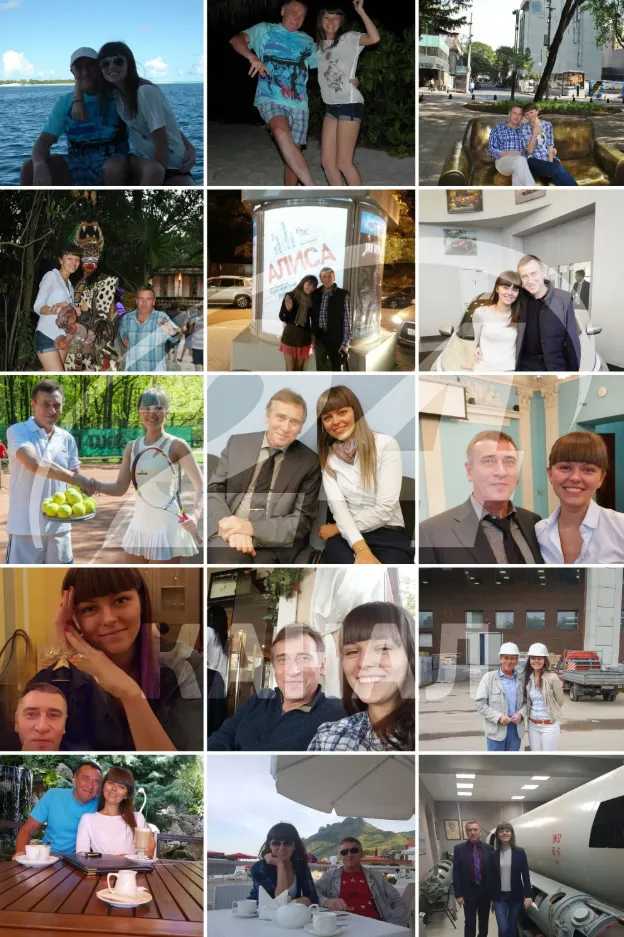
They exchanged intimate photos and traveled to occupied Crimea, Thailand, Mexico, and other destinations.
Part of the shared photos of Kurnosov and Zornina / Collage from the war criminal’s email
However, at some point Zornina cheated on Kurnosov with a man her own age, after which the couple separated for a time. The engineer took the breakup so hard that for four years he sent himself hundreds of "sentimental" emails filled with memes and advice on how to build relationships with women.
It’s never too late to learn, even at 52 / Screenshot from Kurnosov’s email

Periodically the designer sent himself messages like "I wish you a peaceful night every day," and sometimes changed his routine and sent himself voice messages. One evening Kurnosov recorded reflections on his life on a voice recorder lasting more than 90 minutes in total.
Listen to part of the voice messages sent by one of the naval architects of Russian submarines:
In addition, the engineer’s email inbox is overflowing with poems by various authors that he sent to himself, songs by Vladimir Vysotsky, and various other materials.
OB and TM poem (c) / Screenshot from Kurnosov’s email

Some of these messages were sent to Zornina after their breakup, and "Bambi the Fawn" even replied to some of them. Eventually the lovers reunited but limited themselves to an open relationship and infrequent meetings that sometimes continue to this day.
Several thousand messages are devoted to the naval architect’s peculiar "outlet" – his dog named Urs. The German Spitz serves as a kind of compensation for the Putin loyalist’s romantic failures: Kurnosov gives the dog aromatic baths, takes him to competitions, and orders portraits of him. Moreover, they have supposedly even "agreed" to die on the same day.
The dog is the one you feel sorry for / Screenshot from Kurnosov’s email

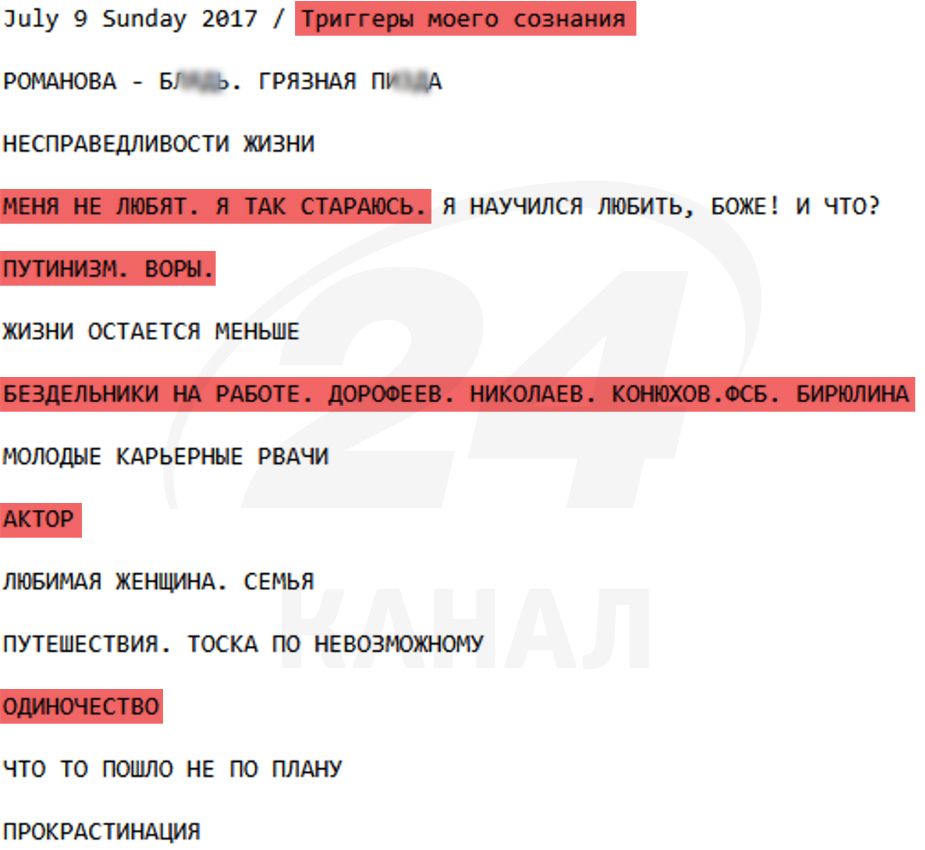
In addition to love stories and frankly trashy memes, the scientist keeps in his email his long-term diary entries from the Daygram app, which are characterized by fragmented thoughts, frequent criticism of Putin, and dreams of Russia’s greatness.
A selection of screenshots from Andrey Kurnosov’s diaries:


Overall, all 80,000 of the engineer’s emails are meticulously organized into folders by year, topic, and recipient and making it possible to build a psychological profile of the mailbox owner: a man obsessed with control and order, lacking self-confidence, who hides his complexes in his work and in the reading of books and poetry.
Russia is working on a new concept for underwater bases that would allow it to command the oceans
Even a preliminary analysis of the naval architect’s psychological state is important for understanding what kinds of people in Russia have access to secret technologies, participate in the development of strategic weapons, and officially possess firearms (Kurnosov is licensed and frequently carries both air guns and firearms).
He is responsible for implementing and developing cruise and ballistic missiles as well as computing and AI systems not only for submarines. However, the work described in his official duties is far from Kurnosov’s main focus. In recent years, the purpose of his work has been creating a fundamentally new strategic underwater system capable of fully replacing an entire fleet.
In his concept, which the engineer began developing back in 2015 – 2016, Kurnosov calls the project an actor. According to the architect’s plans, the system would be a modular structure capable of performing hydroacoustic, hydrological, and navigational reconnaissance, searching for cables and other infrastructure targets, and providing targeting data for direct strikes.
The actor should also carry unmanned aerial and deep-sea underwater vehicles capable of covertly delivering special forces groups to sabotage sites, and possess AWACS and missile defense capabilities. At the same time, it must be small enough to avoid leaving a thermal signature and to discreetly move system modules in standard maritime containers. Moreover, a small crew would reduce operating costs and increase operational endurance.
The key characteristic of the actor should be its plausible deniability. In military terminology, this means it would be impossible to prove its origin or affiliation.
Kurnosov’s note about the underwater system that was supposed to bring Russia to a fundamentally new level, dated 2017 / Screenshot from the naval architect's email

In addition to its purely military purpose – which is the top priority for the Kremlin – the actor should also have civilian applications. The key ones include resource extraction in the Arctic, as well as ocean waste remediation.
The Kremlin’s Plan: Exporting Security Through Undermining Geopolitical Stability / Screenshot from Kurnosov’s email

Moscow aimed to dominate the oceans using Western capital
Incidentally, it was precisely through the guise of addressing environmental problems that Kurnosov and his project’s supporters planned to attract additional funding for the project. The money for the Russians was supposed to come from… Western corporations.
The perfect combination for Moscow – building a superweapon with Western money / Screenshot from Kurnosov’s email

And if it seems to to a casual observer that such a global system invented by a single engineer goes beyond common sense and Russia’s capabilities, that is not entirely true. The point is that Kurnosov’s idea gained high-ranking supporters
One of them is Andrey Bezrukov, adviser to the CEO of Rosneft, professor at the MGIMO Department of Applied Analysis of International Problems, and member of the Presidium of the Council on Foreign and Defense Policy.
Andrey Bezrukov is a well-known Soviet and Russian spy who, according to his cover story, was the Canadian Donald Heathfield. Together with his colleague and wife Elena Vavilova (Tracey Lee Ann Foley), he lived outside the USSR for more than 20 years – in the Czech Republic, France, and Canada. For a long time he worked in the United States at a consulting agency and networked with influential politicians and entrepreneurs. After being exposed, the couple was returned to Russia in a spy swap. The children of Bezrukov and Vavilova proved in court that they were not involved in working for a hostile country, knew nothing about their parents’ activities, and had never even heard their parents speak Russian. Both sons wanted to live in the West but later reportedly moved to the aggressor state.
Kurnosov has been in communication with this extremely influential figure for many years.

Through him, he received not only many important contacts among heads of defense companies and business giants, but even political support from Yuri Kovalchuk – the same person who can directly influence Putin, promote virtually any fringe idea, and obtain approval for its implementation.
Within a few years of the concept’s creation, Kurnosov had already received Kovalchuk’s support / Screenshot from the engineer’s email

In April 2018, Kurnosov wrote to Bezrukov that the actor should also serve as a basing platform for super-heavy robots intended for the ocean exploration and development. This would involve placing platforms for manufacturing marine robotics in countries allied with Moscow in Latin America, Africa, and beyond to create a kind of "security export."
The construction of "factories" for military deterrence of Western countries in 2018 was one element of Russia’s plan to establish a multipolar world / Screenshot from Kurnosov’s email

It is clear that such a grand-scale project initiated by a Putin-aligned naval architect cannot be implemented in just a few years. It is especially difficult to execute under sanctions imposed on Russia after 2022. The Russian economy is also highly unstable. However, Moscow has already realized at least part of the concept developed by Kurnosov and his hardline allies.
How Russia prepared sabotage in Europe and the seizure of the Arctic as early as 2016
One of the key factors that, according to Putin and his circle, should allow Russia to assert a central security role in the world would be a series of crisis situations: economic turmoil, cyberwars, technological disasters, uncontrolled migration, and wars.
Kovalchuk, Bezrukov, and other ideologues correctly predicted that the greatest demand for security arises precisely in times of threat. Representatives of the Russian elite viewed Russia as a kind of security exporter to other countries. However, for the Kremlin to be approached for guarantees, Moscow needed to provoke those same crises.
This concept, in which Kurnosov incorporated his vision of the actor, was formulated by Russian policymakers, ideologues, and business titans as early as 2016. It was presented during a closed-door session of the Valdai International Discussion Club.
Security guarantors are not needed if the world lives in peace / Screenshot from the 2016 presentation of the closed-door Valdai Club session.

In the presentation, the Russians explicitly stated that in the event of specific crises other countries would look for alternatives to the United States as providers of technology and security.
Russia itself was supposed to provide the alternative to the U.S. / Screenshot from the 2016 Valdai Club presentation

At the same time, the Kremlin argely ignored China China in this redivision of the world.
They wanted to export security but could not even spell "historical" correctly / Screenshot from the 2016 Valdai Club presentation

At the same time as developing the strategy under which Russia should provoke a series of crises and then heroically offer solutions, Kurnosov and Bezrukov’s group actively studied mapping of undersea communication cables.
Internet cable routing diagrams were on Kurnosov’s desk as early as 2016 / Screenshot from the Russian naval architect's email

Russia's plan to redivide the world by 2035
So should the numerous acts of sabotage currently carried out by the Kremlin using the "shadow fleet" be considered opportunistic operations intended to intimidate the West and deter support for Ukraine? Or are they the result of a calculated strategy aimed at undermining global security? The questions are largely rhetorical – especially when viewed in the context of Moscow’s long-term plans. They can be clearly seen in a 2020 presentation created by Andrey Bezrukov, including with the participation of Kurnosov, for a forum of the Agency for Strategic Initiatives and the Roscongress Foundation.
Although Putin’s inner circle did not account for a full-scale invasion of Ukraine in their projections and predicted the collapse of the European Union in 2023, they quite clearly foresaw the beginning of a new Cold War, cyberwarfare, and the United States’ transition to so-called "Neo-Rooseveltianism" with a foreign policy shift dubbed the "Monroe Doctrine 2.0."
The Monroe Doctrine is a U.S. foreign policy declaration proclaimed in 1823 by President James Monroe. The concept of the document was based on the principle "America for the Americans" and delineated spheres of influence between America and Europe. The doctrine prohibited European states from interfering in the internal affairs of countries in the Western Hemisphere and guaranteed U.S. non-interference in European conflicts.
Russia’s forecast plans for the world until 2035 / Screenshot of the presentation from Kurnosov’s email

Even more interesting is the planned partitioning of countries into spheres of influence, where the world would be transformed into notional islands with two or three centers of power. Russia was assigned the role of a decision-making hub in Eurasia and the creator of a new technological bloc. According to the plans and forecasts, half of Europe would fall under the Kremlin’s orbit. Only France, Spain, Italy, Sweden, Norway, and Germany would remain under contested influence from Washington and Moscow.
Not only Trump: Putin also has his sights set on Greenland
As well as Greenland, which interests the Kremlin in the context of capturing the Arctic and its resources. In the vision of Russian strategists, the United States by 2035 would be divided into two blocs: an English-speaking north and a Spanish-speaking south.
At the same time, most of South America, almost the entire Middle East, and many African countries were classified by Putin’s allies as a "void" – places of constant conflict and instability. Before the full-scale invasion, Moscow envisioned the same role for the Donbas.
Putin is also eyeing Greenland / Screenshot of the presentation from Kurnosov’s email

Russia adapts but does not change its plans
Obviously, in the fifth year of the full-scale war against Ukraine – when Russia failed to achieve its strategic goal of capturing Kyiv in three days – there can be no talk of creating a Eurasian "island" centered in Moscow. However, the Kremlin’s every action show that neither Putin nor his ideologues have abandoned the ambitious plans formulated back in 2020.
Despite severe economic problems, the Russians are simply adapting to the evolving situation. They are trying to act in ways that would lead the European Union to a de facto collapse and render NATO incapable of acting as a unified force.
By playing along with Trump and his Monroe Doctrine 2.0, destabilizing the situation in Germany, France, Italy, and other states through its political proxies. Moscow continues its sabotage and terrorist activities at sea, launches drones into the airspace of countries neighboring Ukraine, fuels conflicts in Africa, provides Iran with intelligence data for strikes on U.S. bases, and in every possible way fuels instability in every region where it has influence.
Ambitious projects such as creating a multi-domain actor to dominate the oceans have not been abandoned. This means that without decisive counteraction, truly effective sanctions, and the supply of Western technologies, the Russians may – if not fully succeed – at least succeed in undermining the global security order.